As a crypto expert with years of experience in DeFi and exchange-based strategies, I'll break down the best ways to generate passive income on crypto exchanges in Canada for 2025. With the market maturing and regulations stabilizing, Canadians have access to tools like tax-sheltered ETFs and compliant platforms. However, all crypto income is taxable—either as business income or capital gains—per CRA guidelines. Focus on regulated exchanges like Coinbase, Binance Canada, or local ones like Bitbuy to minimize risks.
Passive income here means minimal ongoing effort after setup, like staking or lending your holdings. Based on current trends, expect overall market volatility but opportunities from rising adoption. In 2025, DeFi platforms emphasize security, with yields averaging 5-20% APY across strategies. I'll cover the top methods, with approximate yields (based on mid-2025 estimates from sources like Blockpit and CoinLedger), risks, and analytics. Yields fluctuate with market conditions—always DYOR.
1. Staking Cryptocurrencies
Staking involves locking your proof-of-stake (PoS) coins to support network security and earn rewards. In Canada, use exchanges like Kraken or Coinbase for easy staking, or wallets like Ledger for self-custody. Popular assets: ETH (post-Merge), SOL, ADA.

How staking works: Lock coins, earn rewards over time.
- Estimated Yield: 4-12% APY (e.g., ETH at 5-7%, SOL at 6-10%). In 2025, Solana ETFs with staking rewards could boost this to 8-12% in tax-free accounts like TFSA.
- Risks: Slashing (penalties for network issues), lock-up periods (illiquidity), and price volatility. Low smart contract risk on major chains.
- Analytics: Staking has grown 30% YoY in Canada due to ETF approvals. For a $10,000 stake in ETH at 6% APY, expect ~$600 annual passive income, minus taxes. Best for long-term holders; avoid if you need quick access.
2. Yield Farming / Liquidity Providing
Provide liquidity to DeFi pools on platforms like Uniswap or Aave (accessible via Canadian wallets like MetaMask). Earn fees from trades plus token rewards. In 2025, focus on secure chains like Ethereum or Polygon to comply with Canadian regs.
 Yield farming flow: Deposit assets, earn fees and rewards.
- Estimated Yield: 10-50%+ APY (e.g., stablecoin pools at 10-20%, volatile pairs higher but riskier). High yields from liquidity mining incentives.
- Risks: Impermanent loss (asset price divergence erodes value), smart contract exploits, high gas fees. DeFi taxes in Canada treat rewards as income. Not ideal for beginners—2025 sees more audits, but hacks remain a threat.
- Analytics: DeFi TVL in lending hit $327M recently, with yield farming driving 20% of passive crypto income globally. For $5,000 in a USDC/ETH pool at 15% APY, potential $750/year, but impermanent loss could cut it by 5-10%. Use tools like Zapper for optimization.
3. Crypto Lending
Lend your assets on platforms like Aave, Compound, or centralized ones like Nexo (KYC-compliant for Canadians). Borrowers pay interest, generating passive returns.
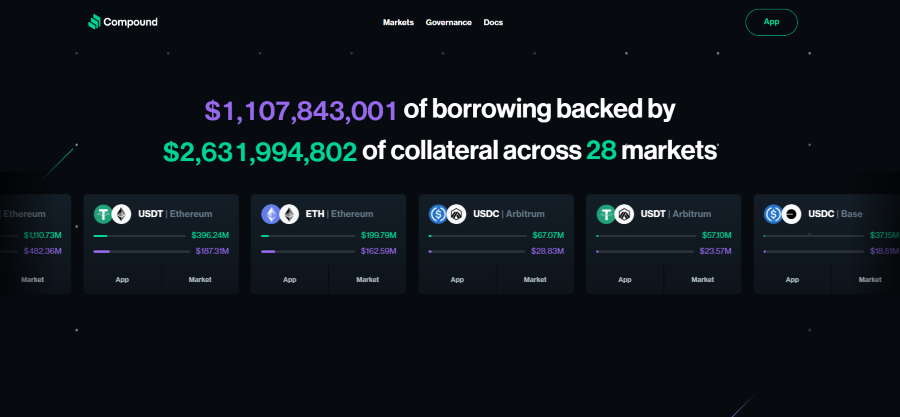
Example lending platform interface showing markets and APYs.
- Estimated Yield: 5-15% APY (stablecoins like USDC at 8-12%, BTC/ETH lower at 4-8%). In 2025, over-collateralized DeFi lending stabilizes yields.
- Risks: Borrower default (mitigated by collateral), platform bankruptcy (e.g., past Celsius issues), and regulatory changes. CRA taxes interest as income.
- Analytics: Lending dominates DeFi with $319M locked. For $10,000 in USDC at 10% APY, earn ~$1,000/year. Safer than farming; diversify across platforms.
4. Cloud Mining
Rent mining power from providers like those listed in CoinCentral's top 7 for 2025. No hardware needed—earn BTC or altcoins passively.
- Estimated Yield: 5-15% APY, depending on hash rate and BTC price. Lower than staking but steady.
- Risks: Scams (vet providers), energy costs baked in, and BTC halving effects reducing rewards. Not as passive if contracts expire.
- Analytics: Popular for BTC exposure without setup. For a $1,000 contract at 10% yield, ~$100/year, but monitor for profitability amid rising difficulty.
5. Holding via Crypto ETFs
Invest in Canadian ETFs like Purpose Bitcoin ETF or CI Galaxy Ethereum ETF for passive exposure. Some include staking yields in 2025.
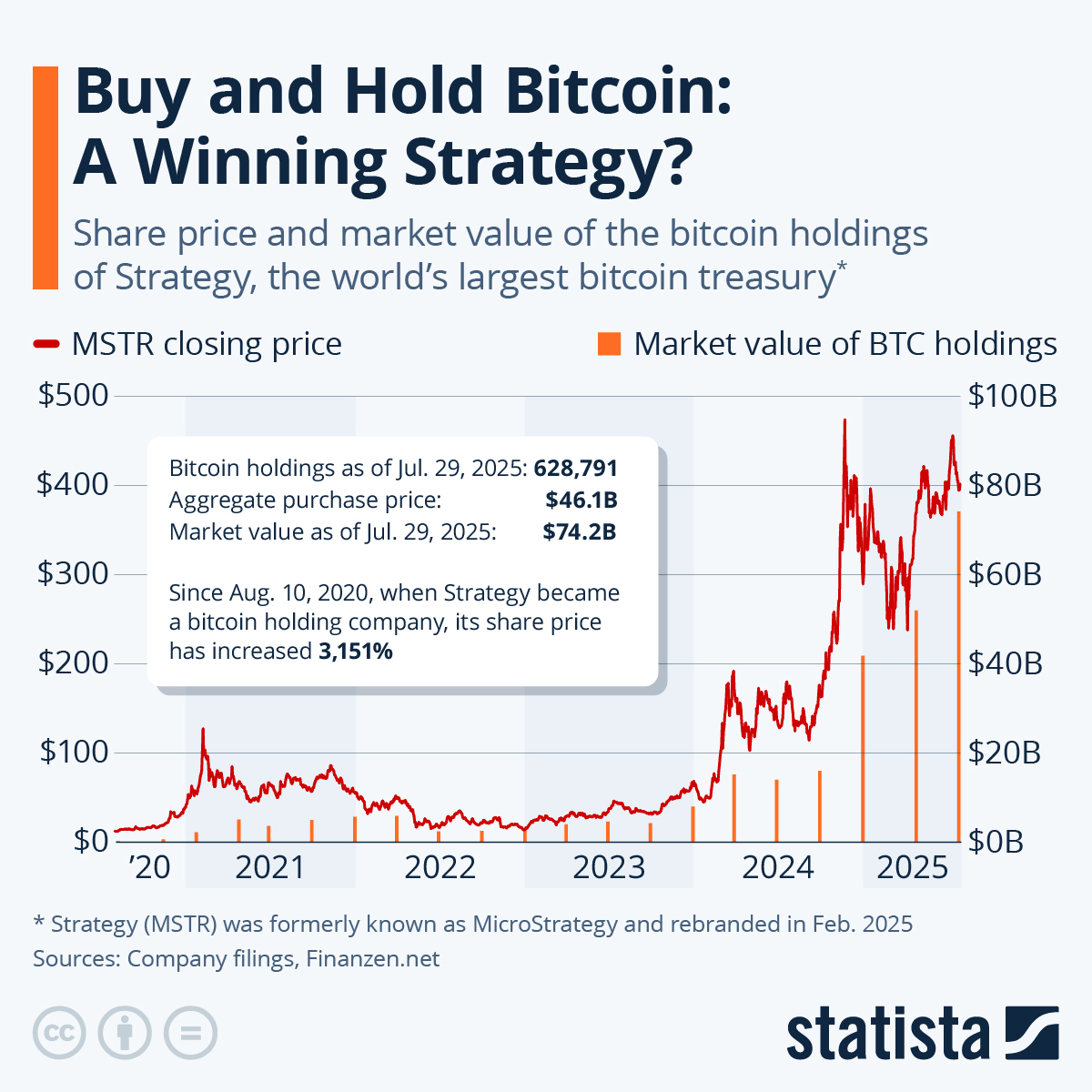
Bitcoin holding strategy performance chart over time.
- Estimated Yield: 0-8% from staking/dividends, plus asset appreciation (BTC up 3,151% in some holdings). Tax-sheltered in RRSP/TFSA.
- Risks: Market crashes, no direct control, ETF fees (0.4-1%). Least "active" but exposed to volatility.
- Analytics: 15+ ETFs available; great for beginners. $10,000 in BTC ETF could yield $500-800 from staking, plus capital gains.
Comparison Table: Yields, Risks, and Suitability
| Strategy | Est. Yield (APY) | Key Risks | Suitability for Canadians | Startup Capital Needed |
|---|---|---|---|---|
| Staking | 4-12% | Volatility, lock-ups | High (ETFs tax-free) | $500+ |
| Yield Farming | 10-50%+ | Impermanent loss, hacks | Medium (DeFi taxes) | $1,000+ |
| Lending | 5-15% | Defaults, platform failure | High (regulated options) | $1,000+ |
| Cloud Mining | 5-15% | Scams, low profitability | Low-Medium | $500+ |
| ETF Holding | 0-8% + growth | Market downturns | Very High (sheltered) | $100+ |
In summary, start with staking or ETFs for low-risk entry in Canada. Diversify, use hardware wallets, and consult a tax pro—crypto gains are reportable. Monitor 2025 trends like Solana staking ETFs for boosted yields. With proper setup, passive crypto can supplement income effectively.